
How bridge protection works
Detect
Weigh in Motion weighs every vehicle at full speed. Optionally, Height in Motion measures vehicle height and Distance in Motion the gap to the vehicle ahead.
Assess
The system automatically compares the measurements with the limits of your bridge. Several redundant systems ensure measurement accuracy.
Divert
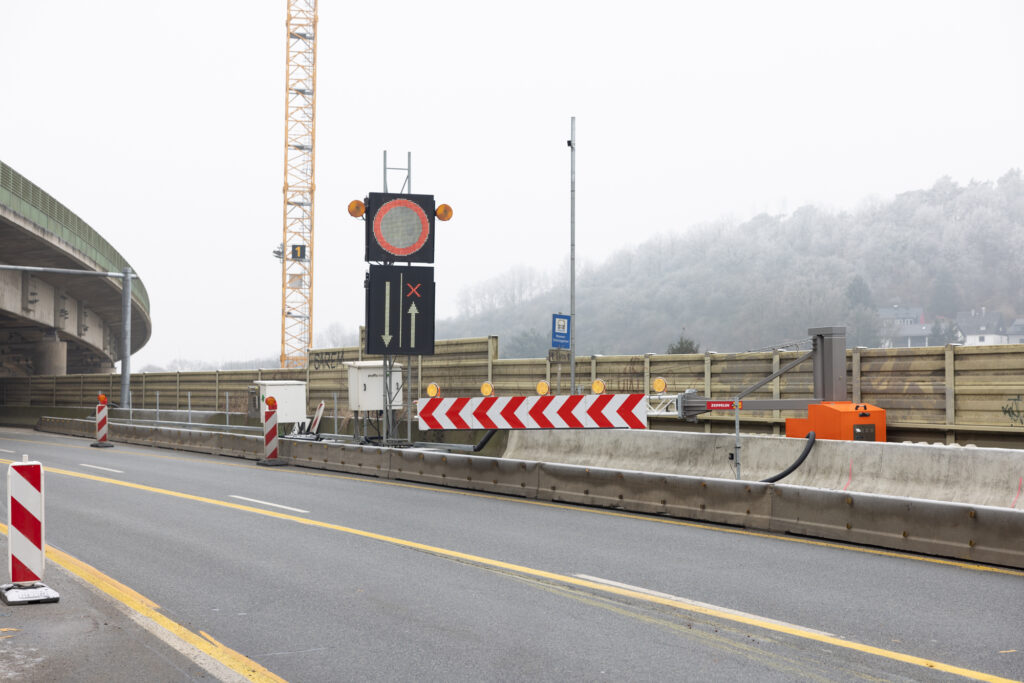
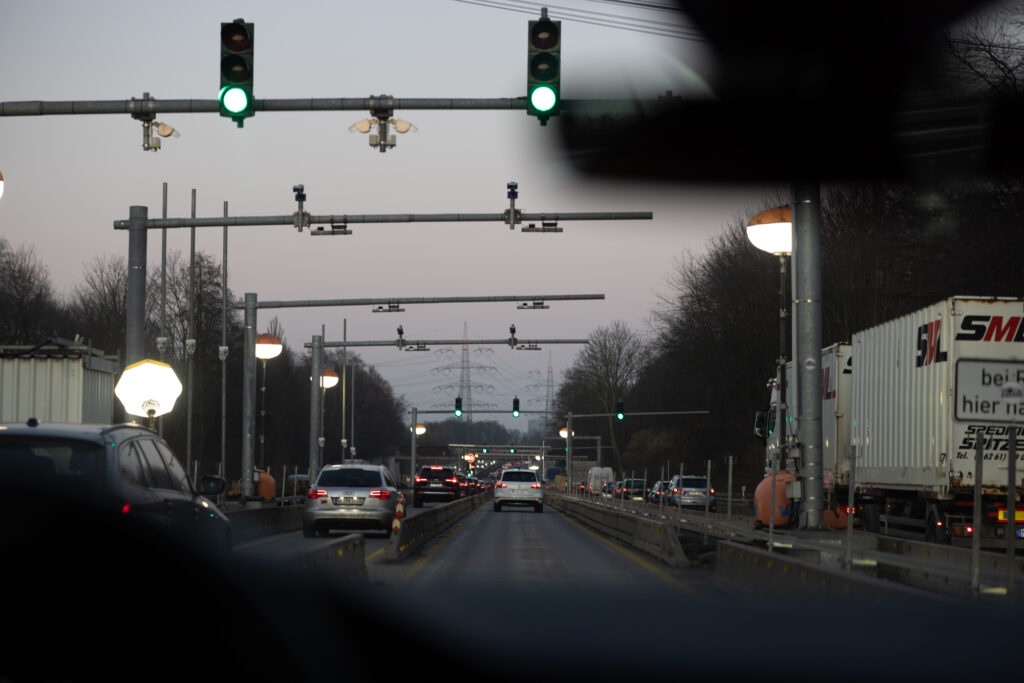
Overweight or over-height vehicles are guided away from the bridge by traffic lights, barriers and sign gantries.
Document
Every measurement is stored. With a weighing station and an interface to the German Federal Office for Logistics and Mobility (BALM, formerly BAG), violations can be checked on the spot.
Your benefits
No staff required
The system works fully automatically around the clock. Nobody needs to carry out checks on site.
Protection for ageing structures
Overloaded trucks never get onto the bridge. This extends its service life and avoids full closures.
Modular
For single-lane or two-lane sections. Existing barrier and traffic light systems can be connected.
Operational in 30 days
Installation is fast, so a load restriction does not remain unenforced for months.
Buy or rent
You decide based on project duration and budget. Rental and sales
Everything from a single source
From feasibility, planning and installation to commissioning and support during operation.
Modules and extensions
- Weigh in Motion: Weighing every vehicle in motion, the basis of every bridge protection system.
- Height in Motion: Height control that filters out vehicles with excessive height before low bridges and tunnels.
- Distance in Motion: Distance control that detects and documents tailgating on the bridge.
- Automated barrier system: Reliably stops diverted vehicles.
- Weighing station with BALM interface: For follow-up checks of conspicuous vehicles.
- Foundation-free sign gantries: Quick to install, with spans of up to 30 m.
You can find more about the technology on the page Weigh in Motion.
Bridge protection or axle load measurement?
Bridge protection
Actively stops overweight or over-height vehicles. Traffic lights and barriers divert them before the bridge. The right system when a load restriction has to be enforced.
Axle load measurement
Weighs and classifies every vehicle without interfering with traffic. The right system when you need to know which loads actually cross the structure.
References: bridge protection at 7 bridges
- Schierstein BridgeA643Mainz/Wiesbaden · 2013
4 lanes Weigh in Motion - Fechingen ViaductA6Saarbrücken · 2016
4 lanes Weigh in Motion - Leverkusen Rhine BridgeA1Leverkusen · 2017–2024
8 lanes Weigh in Motion - Neuenkamp Rhine BridgeA40Duisburg · 2018–2024
Barrier system, weighing station with BALM interface - Bergshausen BridgeA44Kassel · 2018–2019
Barrier system, foundation-free sign gantries - Emscher Valley BridgeA43Herne · since 2024
Automated barrier system - Rhine-Herne Canal BridgeA42Bottrop · since 2024
4 lanes, sign gantries with spans of up to 30 m
View all 16 projects on the map
FAQ on bridge protection
How quickly is a bridge protection system operational?
The system is operational within 30 days. The modular design and foundation-free sign gantries make this possible.
Does the system need staff on site?
No. Measuring, assessing and diverting run fully automatically, around the clock.
Can existing traffic lights and barriers be used?
Yes. Bridge protection can be linked to existing barrier and traffic light systems.
Can I rent a bridge protection system?
Yes. You can buy the system or rent it for the duration of your project.
Where do you use bridge protection?
On single-lane and two-lane sections of motorways and federal roads, throughout Europe.